We create future-oriented food
for animals and people
The highest quality standards, verified
in our own accredited laboratory
We use energy
and transportation efficiently
At ERBACHER the food family, we create future-oriented food for animals and people. For us, it means doing business in an ecological, economic and social triad. This includes providing people at our sites with value-creating work and managing the company in such a way that the next generations can benefit from our input and also follow this path.
Our approach toward future‑oriented production
As ERBACHER the food family, we have committed ourselves to working towards the Net Zero 2045 mission. What this means: The United Nations defines Net Zero as "the reduction of greenhouse gas emissions to as close to zero as possible". To this end, we are developing a transformation path, which will be our itinerary for the coming years, bringing us step by step closer to our Net Zero goal.
This is what our transformational path looks like
By 2035, we aim to reduce our direct Scope 1 and 2 emissions at the Kleinheubach site by 40% and set equally ambitious targets for our site in Nowy Tomyśl, Poland. We are also examining our Scope 3 emissions across the entire Food Family value chain. These emissions are around four times higher than our total Scope 1 and 2 emissions and therefore represent the largest lever. As they lie outside our direct control, data collection is complex and reducing them requires close collaboration with our suppliers.
We are aware that our transformation journey will be a long one, but we are ready to take it on. In recent years, we have already initiated measures that support our Net Zero vision: in Scope 1, for example, new heat pumps at our Kleinheubach site; in Scope 2, the purchase of 100% green electricity with a certificate of origin. At the same time, we continue to work on reducing our electricity consumption – not only for economic reasons but also to free up more green electricity for the general grid and other consumers, thereby contributing to CO₂e reduction. Our expertise in process optimization and our third photovoltaic system is particularly valuable here. For Scope 3, we are currently developing a strategy including concrete measures, bringing us closer to addressing the major levers for reducing greenhouse gas emissions.
More initiatives for future‑oriented production:
- We promote awareness of corporate responsibility among our employees and support conscious behaviour.
- When selecting suppliers and service providers, we evaluate their approach to responsible business practices.
- Some of our raw materials are delivered by rail.
- We prefer to use local building materials at the sites.
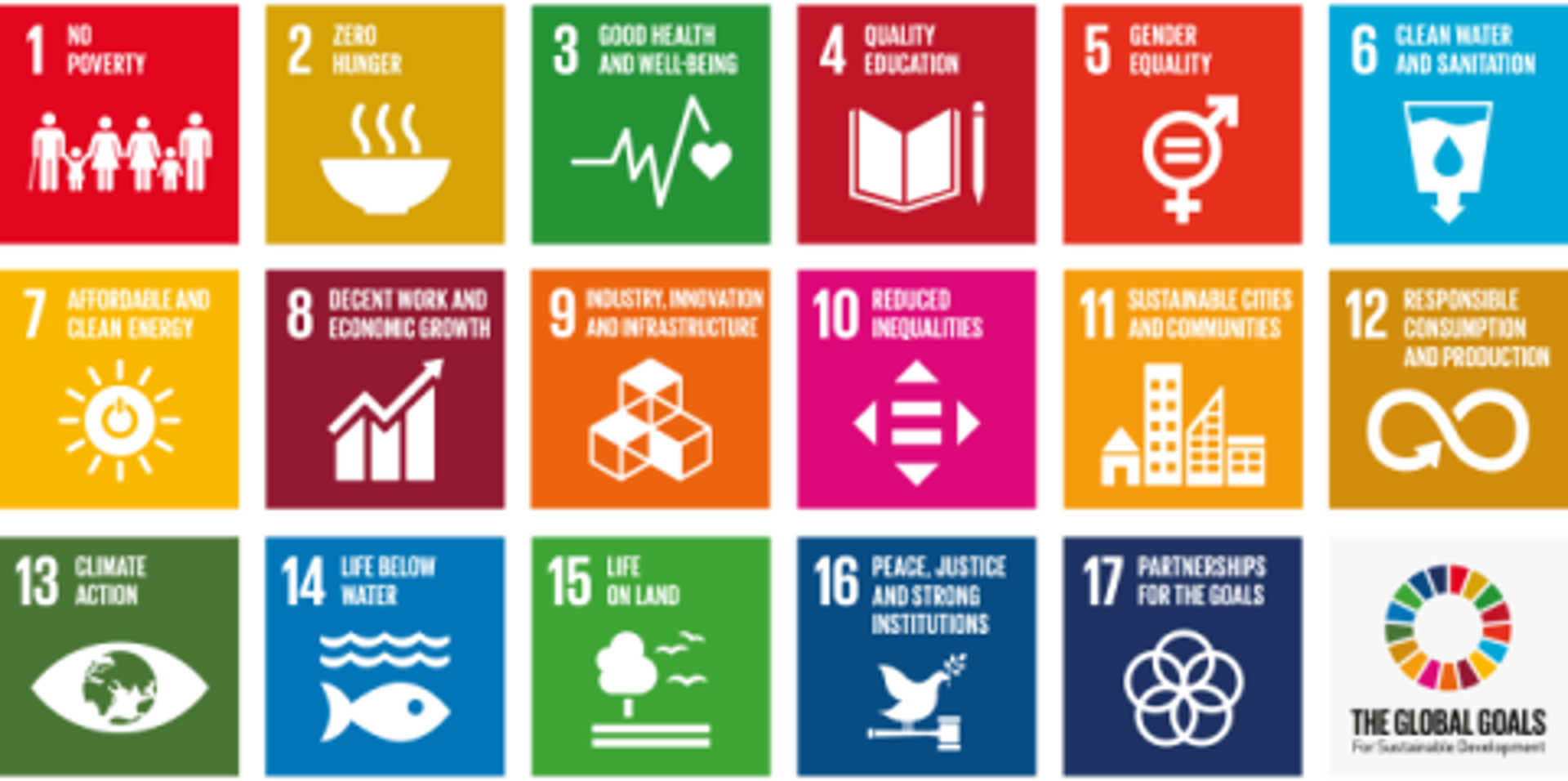
Sustainable Development Goals
The SDG 2030 provides orientation for certain company objectives, completing our existing strategic priorities. One example of this is the ZNU - the Centre for Sustainable Leadership at Witten Herdecke University. Like other companies in this network, we try to make our influence tangible and measurable. Because, only by measuring your own status, you can find the measures you need to take to become an even more responsible company. We are also in constant contact with other partners, whether for quality assurance, sustainability projects, climate protection projects or dialogue and idea exchanges within the industry. We are grateful to be able to work openly, with honest partners, to improve constantly.
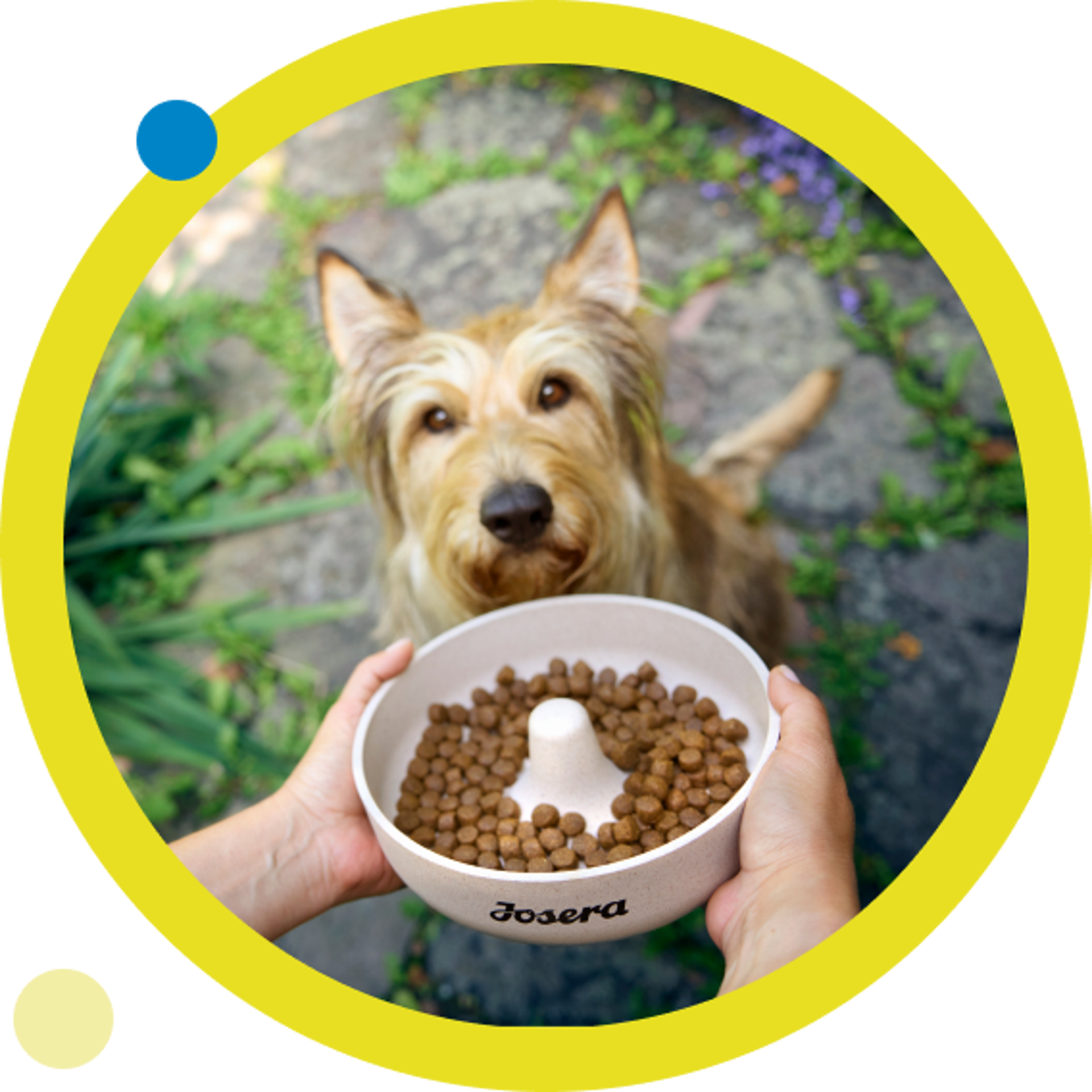
High quality is our priority
We are committed to ensuring that each of our products is safe and reliable. Flavour, acceptance, efficacy and quality go together. This applies to food, pet food and farm livestock feed. We rely on high internal quality standards that help us to fulfil these requirements.
That is why we operate our own on-site testing laboratory, which is accredited in accordance with DIN EN ISO 17025. In our laboratory, chemical laboratory technicians, food technicians and other experts monitor the quality of all our products on a daily basis.
It goes without saying that we are also more than happy when external independent experts examine our quality management and production. Many of our certifications have been held for many years now e.g., the EMAS (Eco Management and Audit Scheme). We use EMAS to systematically assess our environmental impact, ensure legal compliance, conduct internal audits, and publish a validated environmental statement.
Schemes like EMAS provide the management framework, but actual improvement results from our actions we implement. This approach has helped us to continuously improve our environmental performance since 2005. Year after year, we are put through our paces, and we are grateful for the new impetus and confidence that these audits give us.
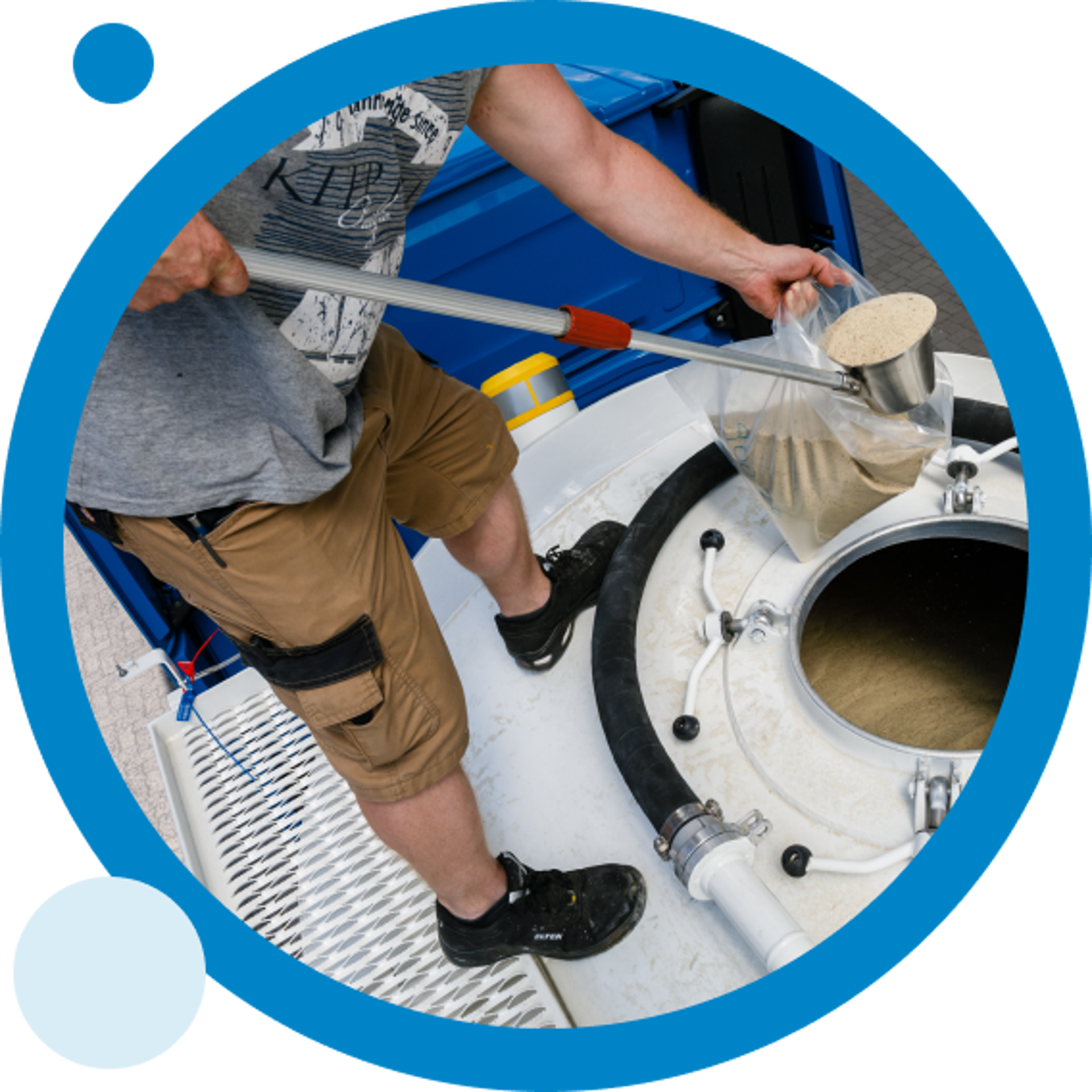
Use of raw materials
Producing animal feed is comparable to baking a cake: a wide variety of ingredients are processed according to a specific recipe.
We use over 350 individual components for our animal feed in the livestock feed and pet food divisions. We use these various components to produce complete feeds (e.g., for cats, dogs, calves, and pigs) or valuable supplementary feeds that make animals healthier and more vital.
When procuring raw materials, we pay attention not only to high quality, availability, and price but also how these materials reach us. Most of our raw materials are sourced in Europe.
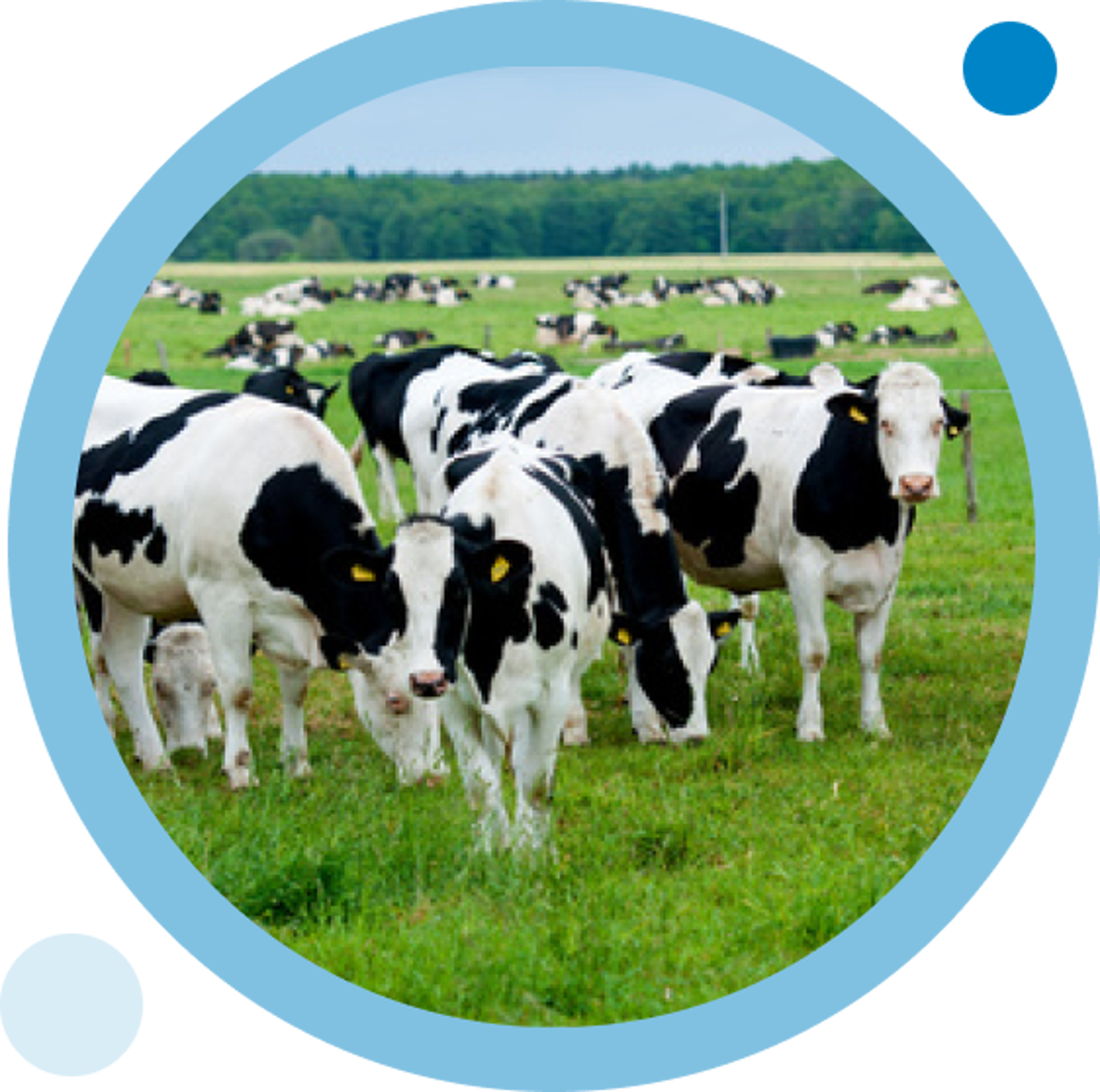
The Josera way of farming
In milk production, we offer optimisation of traditional methods (for both: conventional or organic ones) in order to contribute effectively to economically, ecologically and socially recognised farming. The third method, the Josera way, is particularly aimed at farms on natural grassland sites that produce their own grass and concentrated feed.
These family businesses operate in material cycles, as they create the opportunity to pass on the land, livestock and knowledge to the next generation. Josera feed products help to optimise the animals' rations.
Rethinking packaging
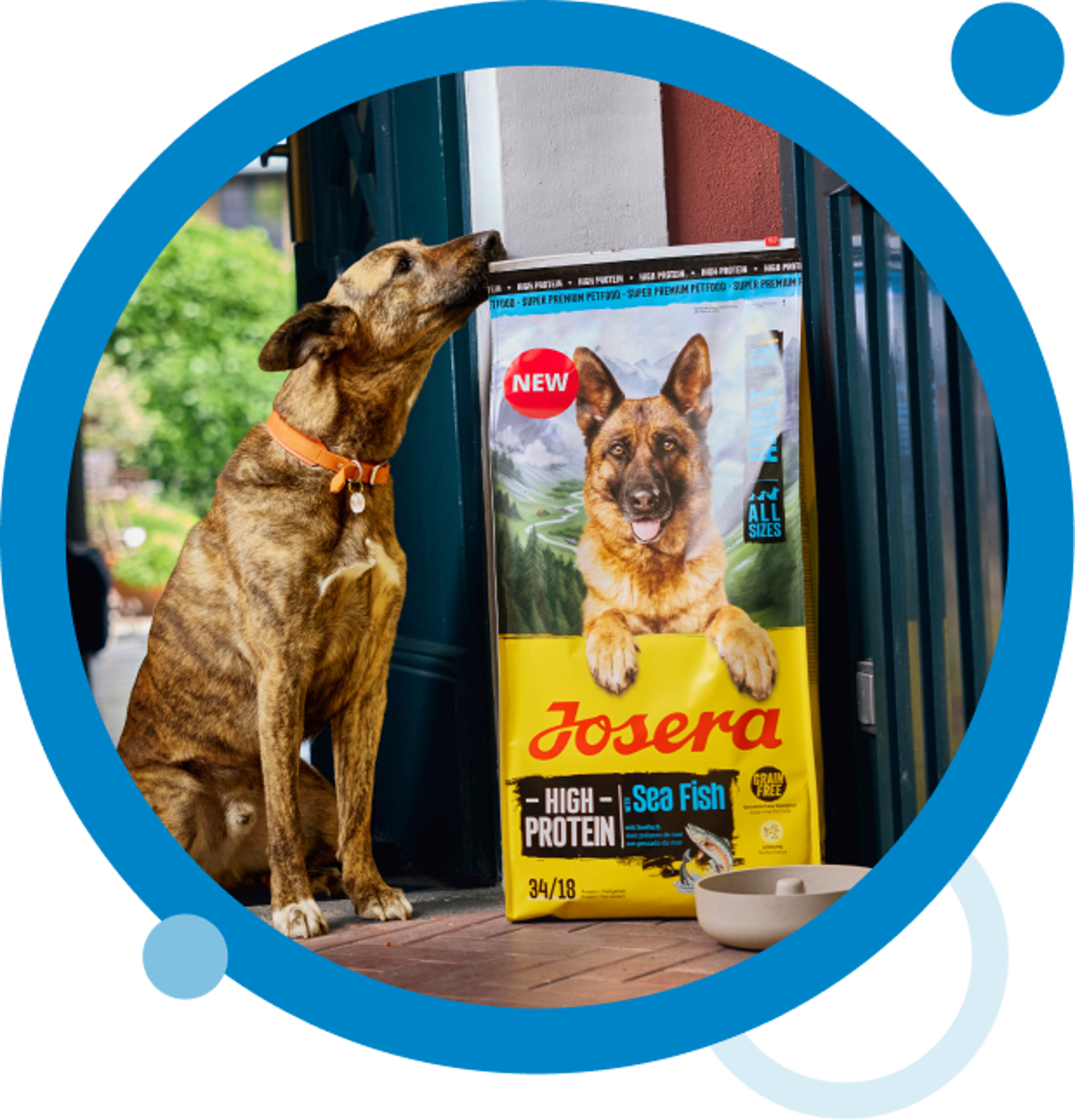
Packaging preserves the high quality of food and animal feed and at the same time offers protection against damage, spoilage, and environmental influences. Furthermore, the product's packaging must be selected in such a way that it meets logistical requirements for transport. The packaging labels serve as an orientation for the customer, and also contain important legal information about the product.
We are conscious of the importance of environmental compatibility regarding packaging. Over many years, we have worked with our suppliers to continuously develop our packaging materials to make them as thin as possible. All this, of course, without losing sight of product protection.
By switching our 15 kg bags of dog food to 12.5 kg and 10 kg, we save over 5 tonnes of packaging material every year.
Thanks to biofilters, our production is scentless
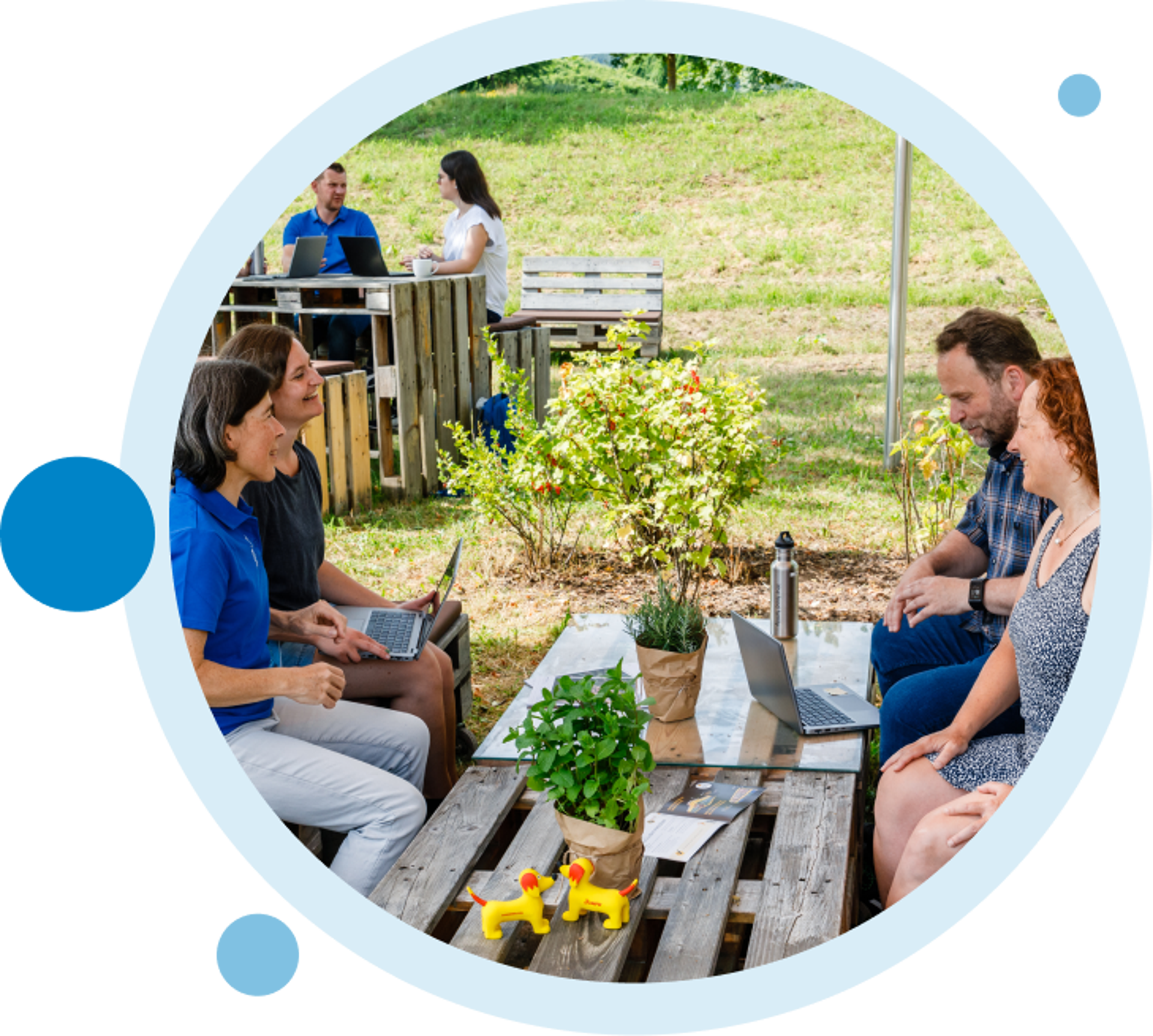
To prevent unpleasant odours from escaping during animal feed production, we use a biofilter to ensure fresh air. The concept is as ingenious as it is simple: a bed of wood chips cleans the exhaust air with the help of bacteria.
The water vapour that escapes is virtually odourless. This keeps our neighbours in local communities happy.
Good energy? We have it!
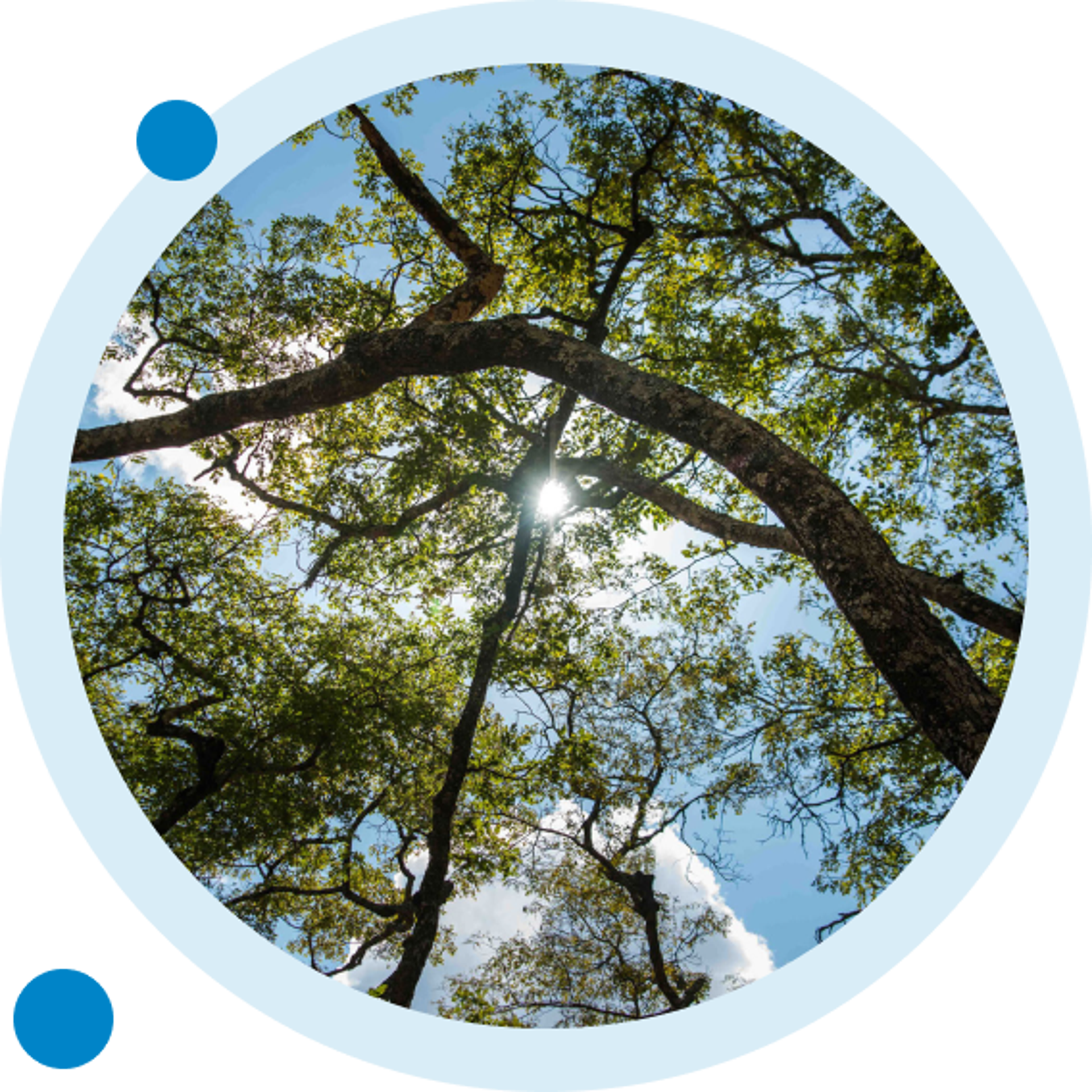
The world's population is growing. Soon over 10 billion people will have to share the same planet. It is therefore our goal to produce our products in a resource-saving way and to act mindfully. At ERBACHER the food family, for all production processes in our plants we need energy to crush, grind, mix, heat, extrude, cool, pack and prepare raw materials for dispatch and sale.
To do this, we use a mix of different energy sources. We generate some of the electricity ourselves using photovoltaic solar systems on the roofs of our buildings. We buy green electricity from our energy supplier.
A special feature is our combined heat and power cogeneration unit, in which we generate electrical energy and heat using a combustion engine. Thanks to clever technical ideas, we utilise 90% of the primary energy. This means that we have improved the standard utilisation rate of conventional combined heat and power cogeneration units by many percentage points.
We also collect data at over 100 measuring points every minute, enabling us to continuously optimise the energy efficiency of our production processes.
We stand tall with local wood
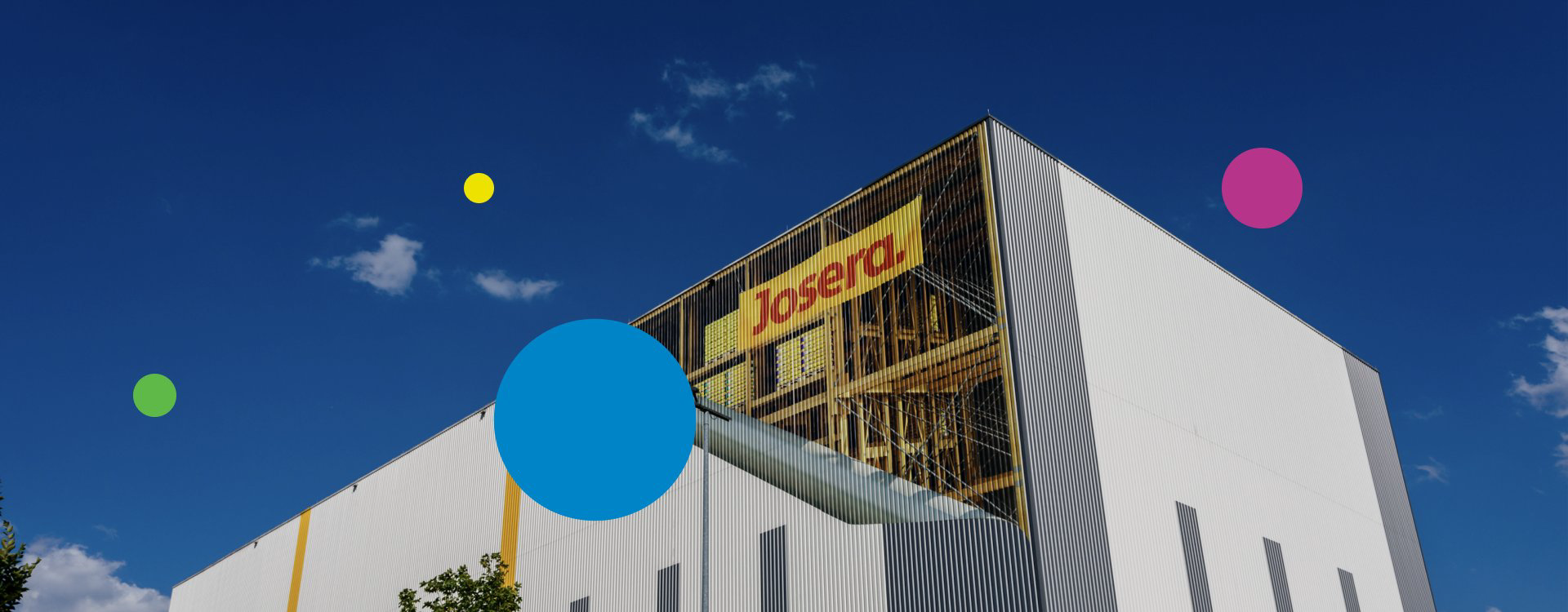
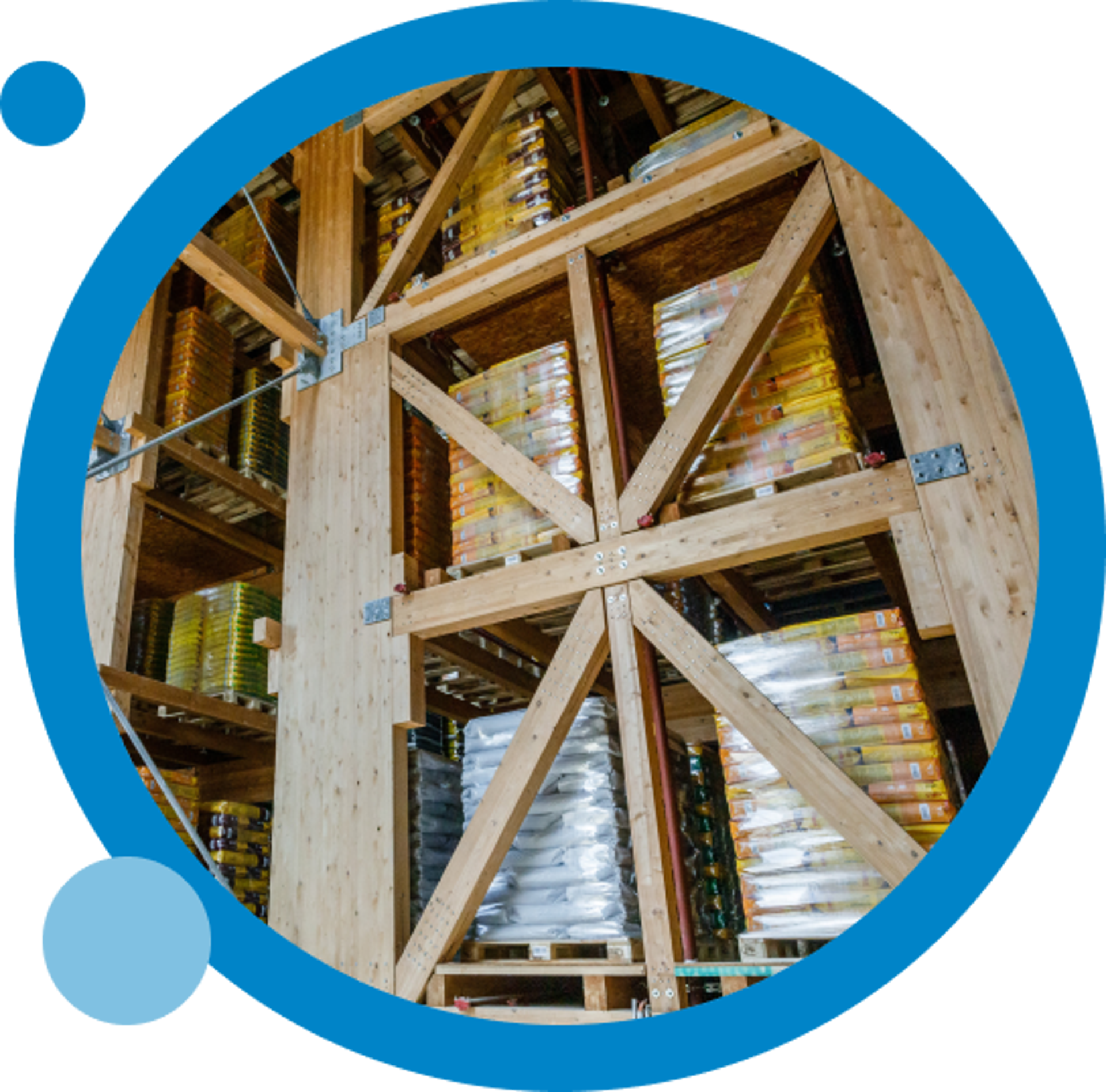
As ERBACHER the food family grew, the construction of a new high-bay storage warehouse was inevitable. As a future-focused company with regional roots, we wanted to create something unique. So, we boldly decided to build our high-bay warehouse from local Odenwald timber.
This wasn't without its challenges. It wasn't just statics that were shaky during the initial planning phase. Nevertheless, we stood firmly to our idea and the plan worked! The state-of-the-art, fully automated wooden high-bay warehouse was completed in 2011.
With its large dimensions of 77 metres long, 32 metres wide and 30 metres high, this building innovation offers space for a total of 9,200 pallets on 14 floors. But it wasn't the dimensions which prompted the German Federation of Nature Conservation to award us the environmental prize. It was the idea of sustainability and the courage to plan this spruce wood construction that impressed the judges.
And on top of all that, our employees are happy to be surrounded by warm wood instead of cool steel when they work in the warehouse.
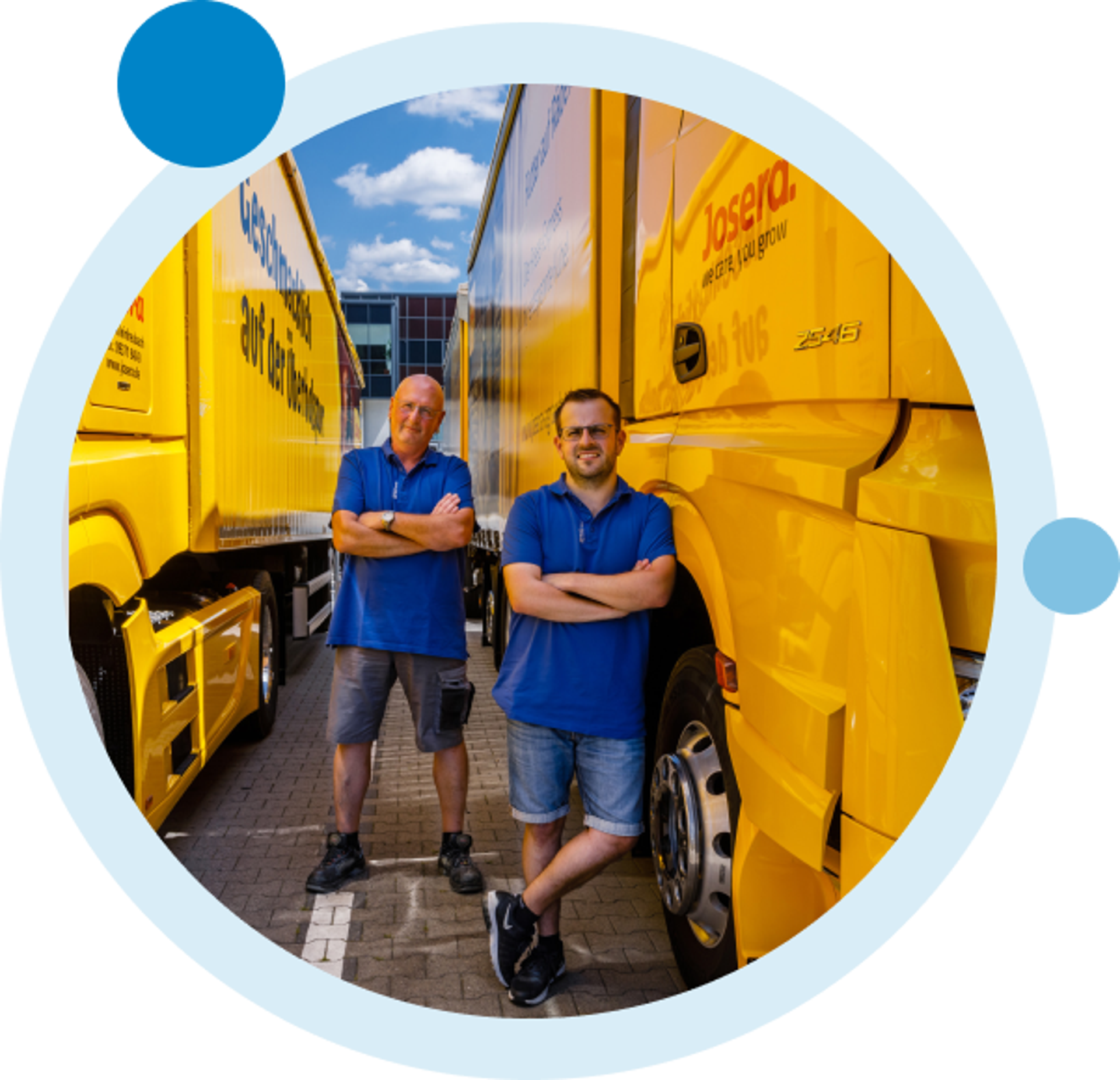
We optimize our fleet and transport
Raw materials are regularly delivered to our production plants and finished products are transported to the customer, so many lorries are on the roads. At ERBACHER the food family, we have our own fleet of lorries.
To avoid empty runs, we plan our logistics so that raw materials are collected on the return journey after the goods are delivered. We also introduced minimum order quantities so the storage space in the lorries is well-filled. This means that we don't send half-empty lorries on long distances.
Moreover thanks to safety and fuel efficiency training, we have been able to achieve considerable fuel savings with our vehicles.
E-mobility is also part of ERBACHER the food family. Leasing subsidies and free electric vehicle charging are available at our sites. Our fleet already includes several electric cars.
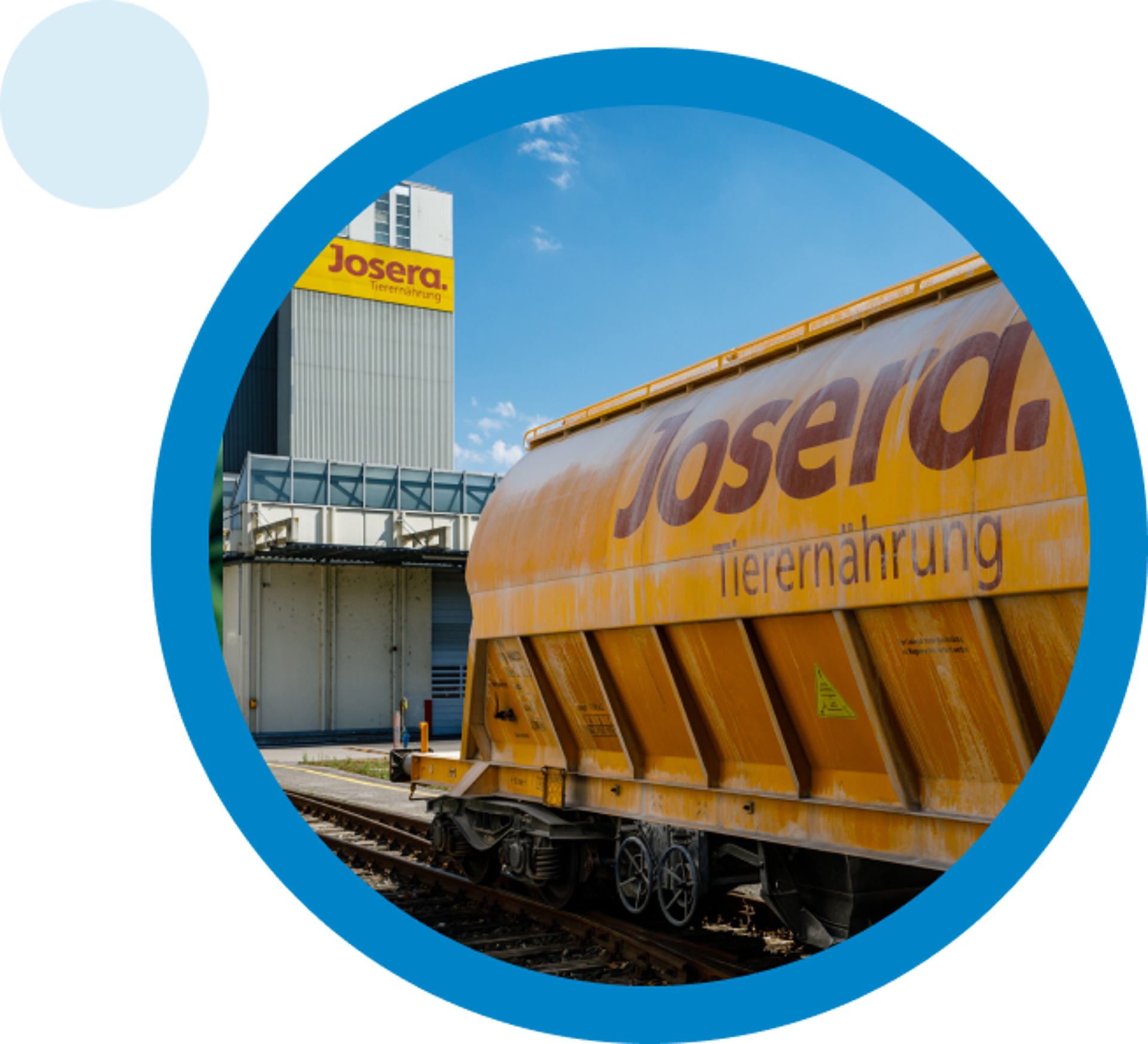
Rail transport as an alternative that makes a difference
We are constantly seeking better choices. Because every decision matters. At our site, we have our own rail tracks. This means that approximately 20% of our agricultural raw materials are transported directly to the plant via the environmentally friendly Westfrankenbahn railway line.
The yellow wagons with the red company logo replace more than 1,100 lorry journeys per year. This reduces the burden on the roads.
Freight transport by rail? A definite yes!